
No products
Prices are tax excluded
Product successfully added to your shopping cart
There are 0 items in your cart. There is 1 item in your cart.
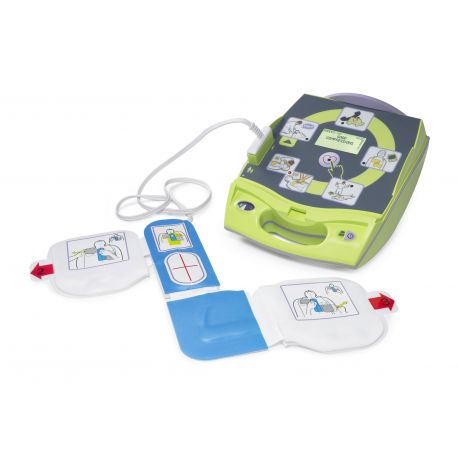
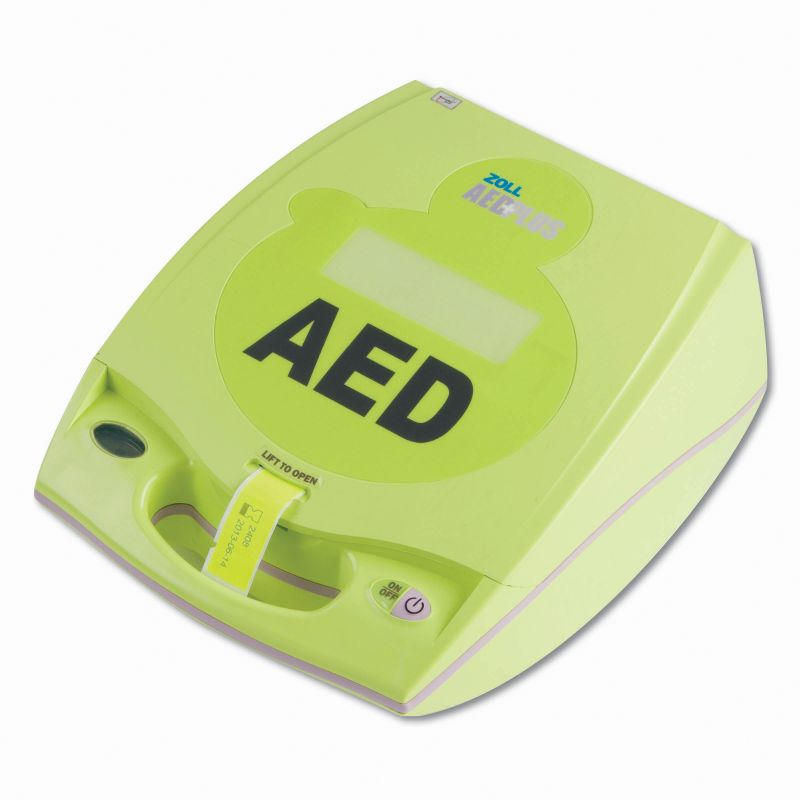
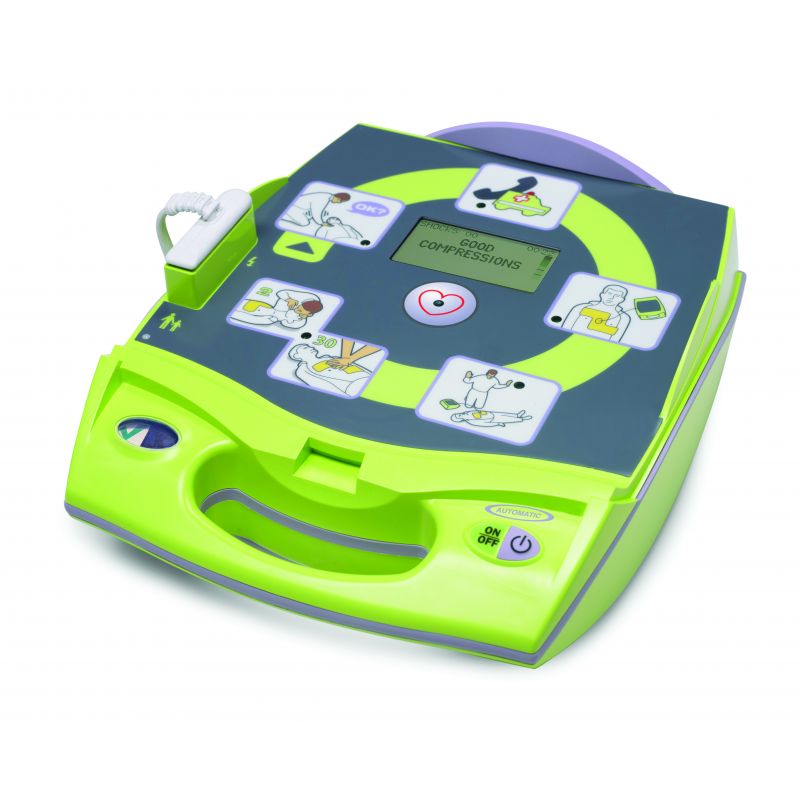
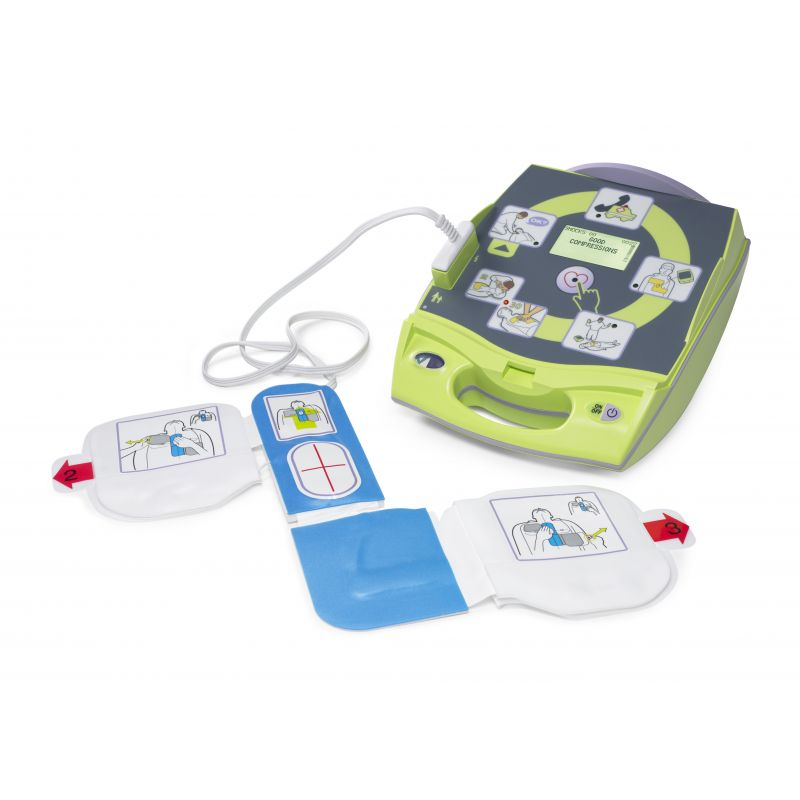
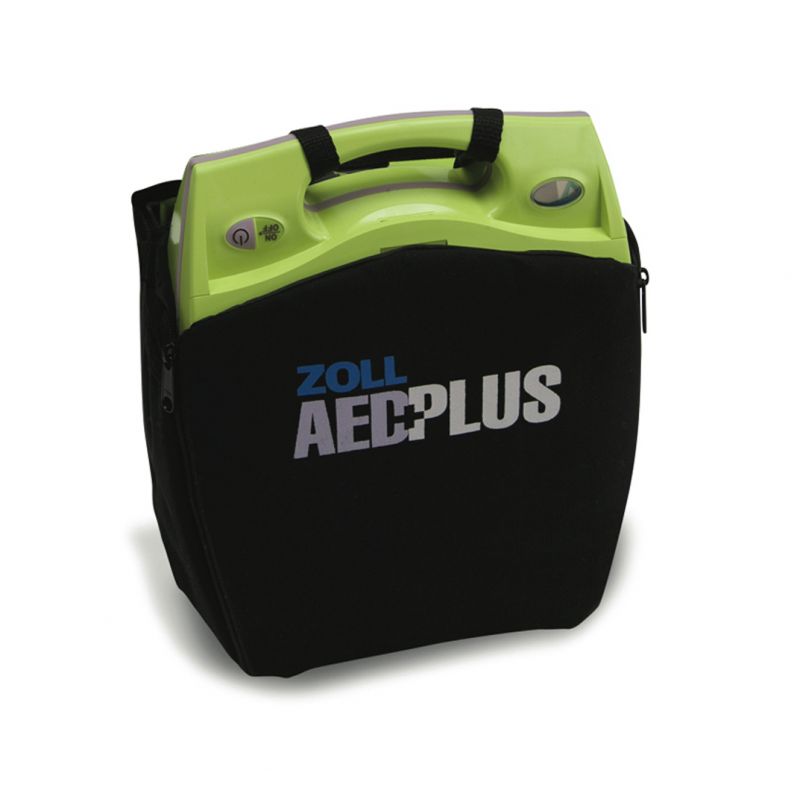
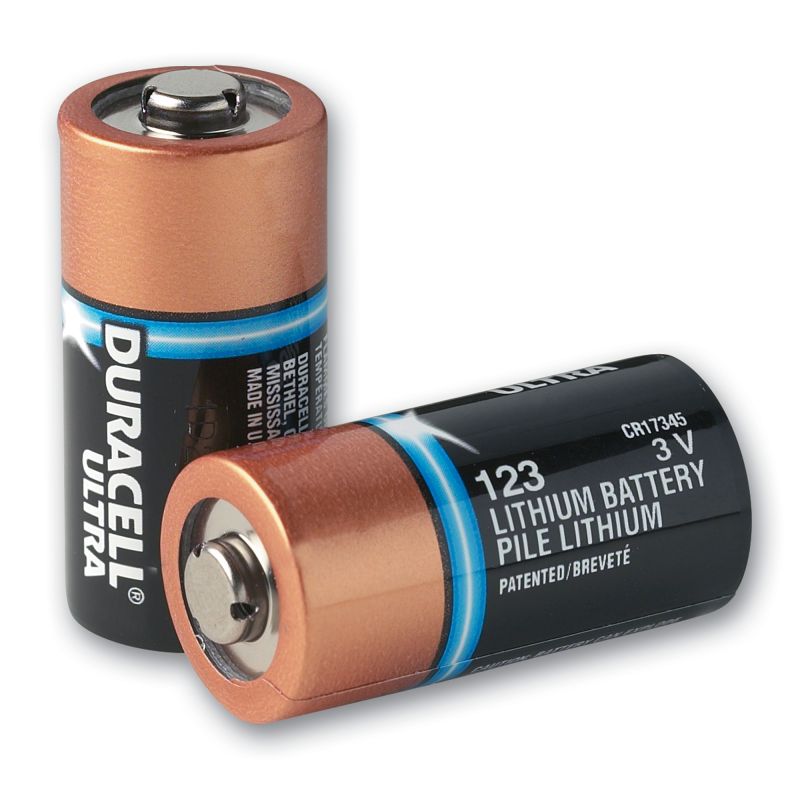
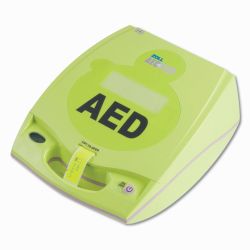
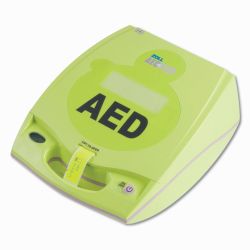
ZOLL AED PLUS DEFIBRILLATOR WITH COVER - BATTERY - CPR ELECTRODE
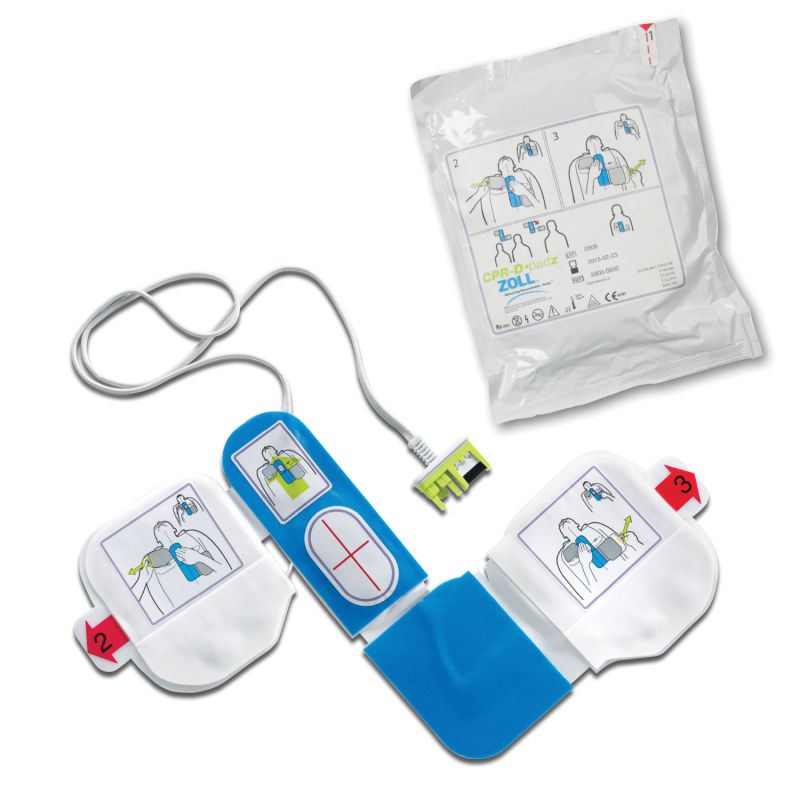
The Real CPR Help® technology featured in ZOLL's CPR-D-padz® includes a hand location locator, an accelerometer, electronic circuitry, and a processing algorithm. They all work together to measure vertical displacement in space as compressions are performed.
MEASURING CHEST COMPRESSION WITH REAL CPR HELP
The force required to compress the chest during CPR varies depending on the complexion and anatomy of the patient. However, the standard measure of the quality of chest compression is not force but depth. The Real CPR Help® technology featured in ZOLL's CPR-D-padz® includes a hand location locator, an accelerometer, electronic circuitry, and a processing algorithm. They all work together to measure vertical displacement in space as compressions are performed.
ONE SIZE
ZOLL's one-piece electrode design takes anatomical variation into account. The design of the CPR-D-padz is based on extensive human data and conforms to the anthropometric characteristics of the thoracic anatomy of 99% of the population. If necessary, the lower (apical) electrode can be detached and adjusted to cover the other 1% of the population.
SIMPLIFIED PLACEMENT
Placing two separate electrode patches on the bare chest of the patient can be confusing for the casual rescuer. ZOLL CPR-D-padz simplifies this step by guiding the placement of the red reference mark in the center of the imaginary line connecting the patient's nipples. Once in place, the handheld locator and the two electrode pads are naturally positioned in the optimal position for both defibrillation and CPR.
SHELF LIFE: 5 YEARS
All DESA electrodes transmit defibrillation electricity to the patient through metal that is in contact with the salt infusion gel that is placed between the metal and the skin. However, over time, the salt in the gel corrodes the metal and ultimately affects the functionality of the electrode. ZOLL's novel electrode design sacrifices a non-critical element of the electrode to control the corrosion process and deliver an unprecedented five-year life.
TECHNICAL CHARACTERISTICS -
- Waveform: rectilinear biphasic.
- Defibrillator charge hold time: 30 seconds
- Energy selection: pre-programmed automatic selection (120J, 150J, 200J)
- Patient safety: all patient connections are electrically isolated.
- Charging time: less than 10 seconds with new batteries.
- Electrodes: CPR-D-padz, pedipadz® II or stat-padz® II from ZOLL.
- Automatic check: Automatic check configurable from 1 to 7 days. Default = every 7 Monthly full energy check (200J).
- Automatic checks: Battery capacity, electrode connection, electrocardiogram and charge and discharge circuits, microprocessor hardware and software, CPR circuit and CPR-D sensor, and audio circuit.
- RCP: Variable frequency metronome between 60 and 100 CPM
- Depth: 3/4 "to 3.5"; 1.9 to 8.9 cm
- Defibrillation Counseling - Evaluates the electrode connection and the patient's ECG to determine if defibrillation is required.
- Shockable rhythms: ventricular fibrillation with mean amplitude> 100 microvolts and wide complex ventricular tachycardia with rates greater than 150 bpm for adults or 200 bpm for children. For the sensitivity and specificity of the ECG analysis algorithm, see the AED Plus Administrator Guide.
- Patient impedance measurement range: 0 to 300 ohms
- Defibrillator: protected ECG circuit
- Display format: LCD with optional motion bar. Size: 2.6 "x 1.3"; 6.6 cm x 3.3 cm
- Optional ECG View Window: 2.6 seconds
- Optional ECG screen scan speed: 25mm / s 1 ”/ s
- Battery capacity: New normals (20 ° C) = 5 years (225 discharges) or 13 years of continuous monitoring. End of life indicated by red X (normal remaining shocks = 9).
- Data logging and storage: 50 minutes of ECG and CPR data. 20 minutes of audio recording and ECG and CPR data, if the audio recording option is installed and enabled. 7 hours of ECG and CPR data if the audio recording option is disabled.
- Minimum PC requirements for patient data setup and retrieval: Windows® 98, Windows® 2000, Windows® NT, Windows® XP computer, IBM compatible, PII with 16550 UART (or higher) .64 MB RAM.
- VGA monitor or better. CD rom. Infrared port. 2 MB disk space.
DEVICE
- Size: (height x width x depth) 5.25 "x 9.50" x 11.50 "; 13.3 cm x 24, l cm x 29.2 cm
- Weight: 6.7 lb; 3.1 kg
- Power: user replaceable batteries.
- 10 batteries type 123A Photo Flash lithium manganese dioxide.
- Device classification: Class II with internal power according to EN60601-1 Design standards: complies with
- the applicable requirements of UL 2601, AAMI DF-39, IEC 601-2-4, EN60601-1, IEC60601-1-2.
AMBIENT
- Operating temperature: 32 ° F to 122 ° F; 0 ° C to 50 ° C
- Storage temperature: -22 ° F to 140 ° F; -30 ° to 60 ° C
- Humidity: 10% to 95% relative humidity, non-condensing
- Vibration: MIL Std. 810F, minimum helicopter test.
- Download: IEC 68-2-27; 100G
- Altitude: 300 to 15,000 feet; -91 m to 4573 m
- Ingress of water and particles: IP-55
Reviews
19 other products
-
1 149,99 € +IVA
-

iPad CU-SP1 DEFIBRILLATOR - AED
994,21 € +IVA
-
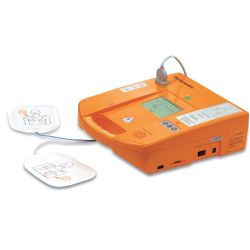
CU MEDICAL DESFIBRILADOR SEMIAUTOMÁTICO CU-ER1 - CON MONITOR Y BATERIA RECARGABLE
2 882,99 € +IVA
-
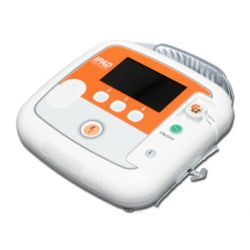
MEDICAL DEFIBRILLATOR SEMI-AUTOMATIC I-PAD CU-SP2
2 356,14 € +IVA
-

GIMA RESCUE SAM AED DEFIBRILLATOR
1 289,99 € +IVA
-
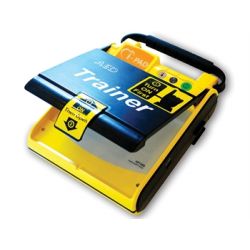
916,79 € +IVA
-

MORETTI CU-HD1 AED DEFIBRILLATOR - ECG 3 LEAD
9 439,99 € +IVA
-

MORETTI CU-HD1 AED DEFIBRILLATOR - ECG 3 LEAD + SPO2 + PACER
11 769,99 € +IVA
-

MORETTI CU-HD1 AED DEFIBRILLATOR - ECG 3 LEAD + SPO2 + PACER ECG 12 LEAD
12 999,49 € +IVA
-

MORETTI NIBP MODULE FOR LTD740 - LTD742 - LTD744 DEFIBRILLATORS
3 139,79 € +IVA
-

CA-MI DEFIBRILLATOR SAVE LIFE LINE -HEART PLUS
1 223,13 € +IVA
-

TECNO-GAZ DEFIBRILLATOR TECNOHEART PLUS
999,99 € +IVA
-

INTERMED SEMIAUTOMATIC CARDIAID DEFIBRILLATOR
1 444,62 € +IVA
-
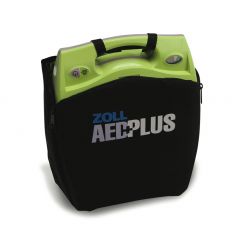
ZOLL AED PLUS DEFIBRILLATOR WITH COVER - BATTERY - ADULT ELECTRODES ( 1PAIR)
989,99 € +IVA
-
ZOLL AED PLUS DEFIBRILLATOR WITH COVER - BATTERY - PEDIATRIC AND ADULT ELECTRODES
1 029,99 € +IVA
-
ZOLL AED PLUS DEFIBRILLATOR WITH COVER - BATTERY - CPR AND PEDIATRIC ELECTRODES
1 123,99 € +IVA
-

ZOLL AED PLUS/PRO PEDIATRIC ELECTRODES FOR AED PLUS ZOLL (1 PAIR)
87,99 € +IVA
-

ZOLL AED PLUS/PRO ADULT ELECTRODES FOR AED PLUS ZOLL (1 PAIR)
63,79 € +IVA
-

644,62 € +IVA
SOCIAL NETWORK


PAYMENTS ACCEPTED


